
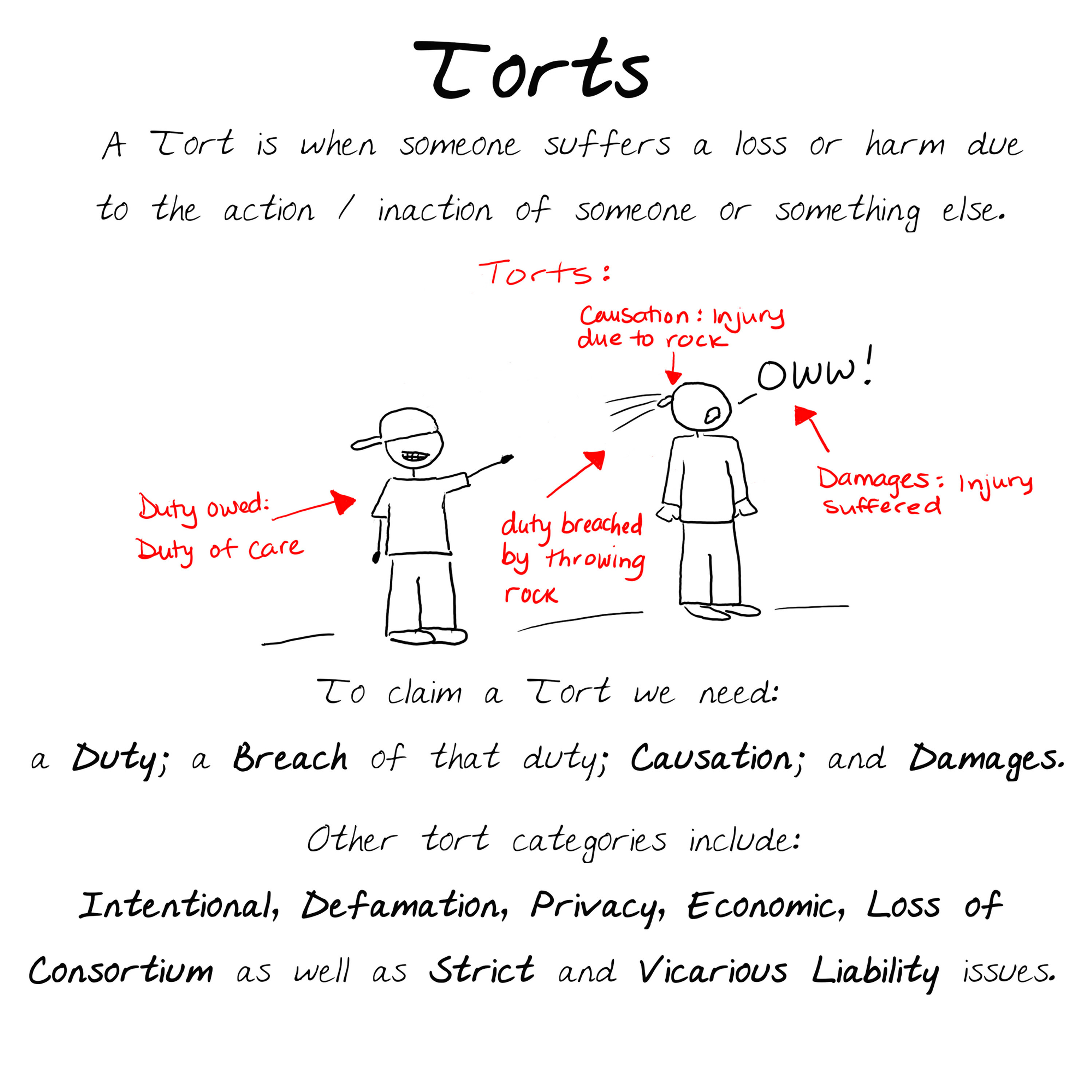

Torts
This SNB Study Course covers New York Bar Evidence Syllabus topics:
INTENTIONAL TORTS INVOLVING PERSONAL INJURY
There are four established intentional torts involving personal injury—battery, assault, intentional infliction of emotional harm, and false imprisonment.
A. GENERALLY
A prima facie case for any intentional tort, including those not involving personal injury, must include proof of the tortious conduct, the requisite mental state, and causation.
Continued...
7 courses
1 Intentional Torts Involving Personal Injury
1.1 Generally
1.2 Battery
1.3 Assault
1.4 Intentional Infliction Of Emotional Distress
1.5 False Imprisonment
2 Consent And Defenses To Intentional Torts Involving Personal Injury
2.1 Consent
2.2 Privileges—in General
2.3 Self-defense
2.4 Defense Of Third Persons
2.5 Defense Of Property
2.6 Privilege To Discipline Or Control A Minor Child
2.7 Privilege To Protect Mentally Impaired Person From Self-harm
2.8 Privilege Of Arrest And Other Crime Related Conduct
2.9 Merchant's Privilege
3 Harms To Personal Property And Land And Defenses
3.1 Trespass To Chattels
3.2 Conversion
3.3 Trespass To Land
3.4 Nuisance
4 Negligence
4.1 Definition
4.2 Duty
4.3 The Standard Of Care
4.4 Breach Or Violation Of Duty Of Care
4.5 Causation
4.6 Damages
4.7 Special Rules Of Liability
4.8 Vicarious Liability
4.9 Limitation Of Liability Resulting From Defendant’s Identityor Relationships (“Immunities”)
4.10 Sharing Liability Among Multiple Defendants
4.11 Defenses To Negligence
5 Strict Liability
5.1 Elements
5.2 Abnormally Dangerous Activities
5.3 The Rule Of Rylands V. Fletcher
5.4 Animals
5.5 Defenses To Strict Liability
6 Products Liability
6.1 Negligence
6.2 Strict Products Liability
6.3 Warranties
7 Defamation, Invasion Of Privacy, And Business Torts
7.1 Defamation
7.2 Invasion Of Privacy
7.3 Intentional Misrepresentation
7.4 Negligent Misrepresentation
7.5 Intentional Interference With Business Relations
7.6 Injurious Falsehoods
7.7 Wrongful Use Of The Legal System


